Monday, August 3, 2009

Honduras


Honduras 2 Lempiras 2003 UNC
Front: Marco Aurelio Soto
Back: Island, and Port of Amapala

Marco Aurelio Soto (1846—1908) was President of Honduras from August 27, 1876 until October 19, 1883. he was known as a liberal. He was a reforming President and had a great impact on the Honduras of his time, including the establishment of the Biblioteca Nacional de Honduras in 1880.
Information and Image Obtained From Wikipedia, the free encyclopedia

Guinea-Bissau


Guinea Bissau 100 Pesos 1990 UNC
Front: Domingos Ramos
Domingo Antonio Ramos (born March 29, 1958 in Santiago, Dominican Republic), is a former professional baseball player who played infielder in the Major Leagues from 1978-1990.

Guatemala, Tikal National Park, UNESCO World Heritage Site


Guatemala 1/2 Quetzal 1998 UNC
Front: Tecun Uman
Back: Tikal
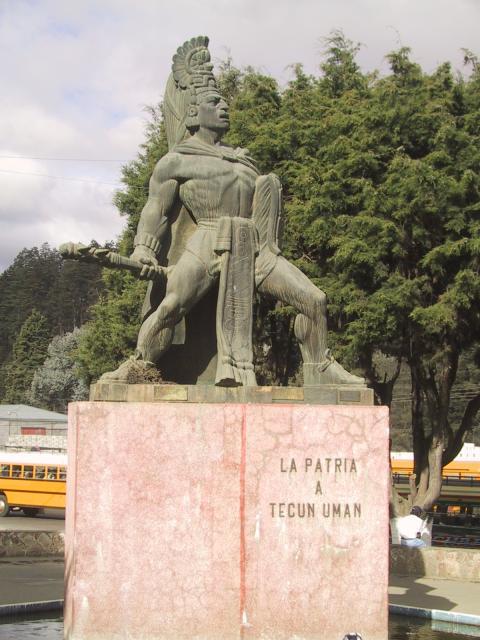

1500?-February 20, 1524. Tecun Uman was the ruler and king of the Kiche-Maya people in the highland, now Guatemala. He is considered the most representative of his people for his bravery and dignity because he fought to protect his land and his people. He was declared Guatemala's official national hero on March 22, 1960 and is commemorated on February 20, on the anniversary of his death.
Image Obtained From Wikipedia, the free encyclopedia

Tikal
Tikal largest archaeological sites. Major sites of Mayan civilization, inhabited from the 6th century B.C. to the 10th century A.D. The ceremonial centre contains superb temples and palaces. In UNESCO World Heritage Site in 1979. There are thousands of ancient structures at Tikal and only a fraction of these have been excavated, after decades of archaeological work. The most prominent surviving buildings include six very large Mesoamerican step pyramids, labeled Temples I - VI, each of which support a temple structure on their summits. Some of these pyramids are over 60 meters high (200 feet). They were numbered sequentially during the early survey of the site. Tikal was one of the major cultural and population centers of the Maya civilization. Though monumental architecture at the site dates to the 4th century BC, Tikal reached its apogee during the Classic Period, ca. 200 to 900 AD, during which time the site dominated the Maya region politically, economically, and militarily while interacting with areas throughout Mesoamerica, such as central Mexican center of Teotihuacan. There is also evidence that Tikal was even conquered by Teotihuacan in the 4th century. [2] Following the end of the Late Classic Period, no new major monuments were built at Tikal and there is evidence that elite palaces were burned. These events were coupled with a gradual population decline, culminating with the site’s abandonment by the end of the 10th century.
Panorama showing Temple I and Temple II facing each other on the Plaza Mayor
Information and Image Obtained From Wikipedia, the free encyclopedia

Haiti


D'Haiti 1 Gourde 1990 UNC
Front: Portrait, Toussaint Louverture
Back:

Tuesday, July 14, 2009

Bhutan

Is a large Drukpa Kagyu Buddhist monastery and fortress in Paro District. It houses the district Monastic Body and government administrative offices of Paro Dzongkhag. Some scenes in the 1993 film Little Buddha were filmed in this Dzong.


Bhutan 10 Ngultrum UNC 1986
Front Design: His Majesty Jigme Singye Wangchuck, Government Crest on the Left, Dungkar (onch) one of the Eight lucky signs in the center
Back Design: Paro Rinpung Dzong

Brunei


Brunei 1 Dollar 1992 VG

Tuesday, July 7, 2009

3rd Series - Ship Series (1984 - 1999)


Singapore 1 Dollar Shipseries 1987 UNC
Front design : "Sha Chuan", A Chinese crane
Type of fish : Cyprinus carpio or Chinese carp
Back design : Sentosa Satellite Earth Station

3rd Series - Ship Series (1984 - 1999)

Front design : "Tongkang", is a light boat used commonly in the old days to carry goods along rivers
Centre Panel : A rising sun to the right of main design
Back design : Different ethnic groups participating in Chingay procession

First issued : 28 January 1991 (Red), 16 December 1991 (Purple)

Monday, July 6, 2009

3rd Series - Ship Series (1984 - 1999)


Singapore 5 Dollar Shipseries 1989 UNC
Front design :"Twakow"
Centre Panel :A Chinese lion with a ball, type of fish Commerson's Anchovy or Stolephorus commersonii
Back design : View of the PSA Container Terminal

Twakow a type of vessel with one mast and junk rig. They were a common sight in the Singapore river in the mid 19th century. Among the ships used on the coast of China.

This ship, the Keying, is an example of a Chinese commerce ship employing the junk rig. It traveled from China to the United States and England for trading between 1846 to 1848.
Information and Image Obtained From Wikipedia, the free encyclopedia

3rd Series - Ship Series (1984 - 1999)


Singapore 10 Dollar Shipseries 1988 UNC
Front: Barter trading vessel "Palari"
Center: A phoenix, type of fish Round Scad or Decapterus Macrosoma
Back: HDB block

3rd Series - Ship Series (1984 - 1999)


Singapore 50 Dollar Shipseries UNC
Front: Coaster vessel "Perak"
Centre: A pair of Mandarin ducks, Type of fish : Six-banded grouper or Epinephelus Sexfasciatus (Valenciennes)
Back design : Bird's-eye view of Benjamin Sheares Bridge

Benjamin Sheares Bridge is the longest bridge in singapore opened on 1982 length of 1.8km and is named after Dr Benjamin Henry Sheares, the 2nd president of the Republic.

Singapore Commemorative Polymer Note


Singapore 50 Dollar 1990 UNC
Front: On the left is a painting image features the harbour and waterfront. On the right is the container terminal flanked by the lofty buildings of the financial district.
Back: Multi racial character of Singapore. On the right is a mixed group of jubilant Singaporean, with the state flag and Singapore Arms behind them. On the left is shown the sitting of the first Parliament.

Center: Shows the first President of Singapore, Encik Yusof bin Ishak, with five stars on the left. Four blossoms of the national flower, Vanda Miss Jaaquim, are above this oval; these flowers are perfectly matched on the front and the back of the note.

Turkey-1980s series


Turkey 10 Lira UNC
Front: President Ataturk
Back: School Children

Turkey


Turkey 5 Lira 1970 VG
Front: President Ataturk
Back: Waterfalls

Thursday, June 25, 2009

Turkey


Turkey 10 Lira 1970 VG
Front: President Atatürk
Back: Maiden's Tower

Maiden's Tower was first built by the ancient Athenian general Alcibiades in 408 BC to control the movements of the Persian ships in the Bosphorus strait. Back then the tower was located between the ancient cities of Byzantion and Chrysopolis. There are many legends about the construction of the tower and its location. According to the most popular Turkish legend, a sultan had a much beloved daughter. One day, an oracle prophesied that she would be killed by a venomous snake on her 18th birthday. The sultan, in an effort to thwart his daughter's early demise by placing her away from land so as to keep her away from any snakes, had the tower built in the middle of the Bosphorus to protect his daughter until her 18th birthday. The princess was placed in the tower, where she was frequently visited only by her father.

On the 18th birthday of the princess, the sultan brought her a basket of exotic sumptuous fruits as a birthday gift, delighted that he was able to prevent the prophecy. Upon reaching into the basket, however, an asp that had been hiding among the fruit bit the young princess and she died in her father's arms, just as the oracle had predicted. Hence the name Maiden's Tower. Read more
Information Obtained From Wikipedia, the free encyclopedia

Turkey


Turkey 20 Lira 1970 VG
Front: President Atatürk
Back: Monument

Turkey-1980s series


Turkey 1000 Lira 1986 VG
Front: Pesident Atatürk 1st President of Turkey
Back: Istanbul; Fatih Sultan Mehmet


In 1927, during the opening of the State Art and Sculpture Museum

Mustafa Kemal Atatürk (indeterminate - 1881–10 November 1938) was a Turkish army officer, revolutionary statesman, and founder of the Republic of Turkey as well as its first President.

Mustafa Kemal became known as an extremely capable military officer during World War I. Following the defeat of the Ottoman Empire, Mustafa Kemal led the Turkish national movement in what would become known as the Turkish War of Independence. Having established a provisional government in Ankara, he defeated the forces sent by the Allies. His successful military campaigns led to the liberation of the country and to the establishment of the Republic of Turkey. During his presidency, Atatürk embarked upon a program of political, economic, and cultural reforms. An admirer of the Age of Enlightenment, Atatürk sought to transform the former Ottoman Empire into a modern, democratic and secular nation-state. The principles of Atatürk's reforms, which modern Turkey was established on, are referred to as Kemalism.

Born as Mustafa, his second name Kemal (meaning Perfection or Maturity) was given to him by his mathematics teacher in recognition of his academic excellence.[2] In his early years, his mother encouraged Mustafa to attend a religious school, something he did reluctantly and only briefly. Later, he attended the Şemsi Efendi school at the direction of his father. His parents wanted him to have education in a trade, but without consulting them he took an entrance exam for a military junior high school in Salonika in 1893. In 1896, he enrolled into a military high school in the Ottoman city of Manastır (modern Bitola, Republic of Macedonia). In 1899, he enrolled at the War College in Istanbul and graduated in 1902. He later graduated from the War Academy on 11 January 1905.

The original print of the first Quran in Turkish language ordered by Atatürk.

Mehmet II "the Conqueror", in Ottoman Turkish, or, in modern Turkish, Fatih Sultan Mehmet) (March 30, 1432, Edirne – May 3, 1481, Hünkârcayırı, near Gebze) was Sultan of the Ottoman Empire (Rûm until the conquest) for a short time from 1444 to September 1446, and later from February 1451 to 1481. At the age of 23, he conquered Constantinople, bringing an end to the Byzantine Empire. He had several wives: Valide Sultan Amina Gul-Bahar, a Greek Orthodox woman of noble birth from the village of Douvera, Trabzon, who died in 1492, the mother of Bayezid II, and Gevher Sultana; Gulshah Hatun; Sitti Mukrime Hatun; Hatun Cicek; Helene Hatun, who died in 1481, daughter of Demetrios II Palaiologos, the Despot of Morea; briefly Anna Hatun, the daughter of the Emperor of Trebizond; and Hatun Alexias, a Byzantine princess. Another son of his was Djem Zizim, who died in 1495.
Information and Image Obtained From Wikipedia, the free encyclopedia

Wednesday, June 24, 2009

Sweden


Sweden 5 Kronor 1978 VG
Front: King Gustav Vasa (1523-1560);
Back: Stylised crowing wood-grouse and a spruce


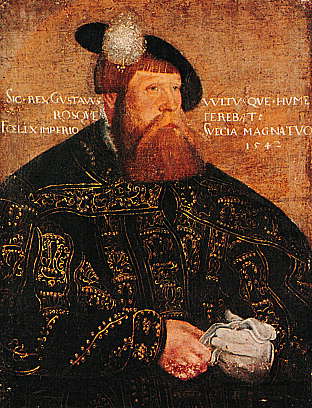
Gustav I portraited in 1542 by Jakob Bincks
Gustav I, born Gustav Eriksson (Colloquial 15th century Upplandic, Gösta Jerksson) and later known as Gustav Vasa (12 May 1496 – 29 September 1560), was King of Sweden from 1523 until his death. He was the first monarch of the House of Vasa, an influential noble family which came to be the royal house of Sweden for much of the 16th and 17th centuries. Gustav I was elected regent in 1521 after leading a rebellion against Christian II of Denmark, the leader of the Kalmar Union who controlled most of Sweden at the time.

Gustav was an enigmatic person who has been referred to as both a liberator of the country and as a tyrannical ruler, which has made him the subject of many books. When he came to power in 1523, he was largely unknown, and he became the ruler of a still divided country without a central government. Though not as famous as most of his continental contemporaries, he became the first truly autocratic native Swedish sovereign and was a skilled propagandist and bureaucrat who laid the foundations for a more efficient centralized government. During his reign Protestantism was introduced in the country.

In traditional Swedish history he has been labelled the founder of modern Sweden, and the "father of the nation". Gustav liked to compare himself to Moses, whom he believed to have also liberated his people and established a state. As a person, Gustav was known for ruthless methods and a bad temperament, but he also loved music, and had a certain sly wit. In the late 1550s, Gustav's health declined. When his grave was opened in 1945, an examination of his corpse revealed that he had suffered chronic infections of a leg and in his jaw.

He gave a so-called "last speech" in 1560 to the chancellors, his children and other noblemen, whereby he encouraged them to remain united. On 29 September 1560, Gustav died and was buried (together with two of his wives) in the Cathedral of Uppsala.


The tomb of Gustav Vasa in Uppsala domkyrka

Information and Image Obtained From Wikipedia, the free encyclopedia
Related Posts with Thumbnails