Sri Lanka 100 Rupees 2004 UNC
Front: Decorative urn
Back: Sigiriya Rock
An Educational portal with various pictures of banknotes and information. All the banknotes on this site is exclusive property of Encyclobanknotes.
Showing posts with label Srilanka. Show all posts
Sunday, July 25, 2010
Srilanka, Sacred City of Kandy, UNESCO World Heritage Site
Srilanka 1000 Rupees 2001 VF
Front: The elephant on the front of the note is "Raja"
Back: Temple of Tooth (Buddha), Kandy , Peacock
Front: The elephant on the front of the note is "Raja"
Back: Temple of Tooth (Buddha), Kandy , Peacock
Thursday, March 25, 2010
Sri Lanka
Sri Lanka 10 Rupees 2001 VG
Front: Sinhalese Chinthe
Back: Presidential Secretariat building in Colombo
Front: Sinhalese Chinthe
Back: Presidential Secretariat building in Colombo
Sri Lanka
Sri Lanka 20 Rupees 2001 UNC
Front: Garuda (destroyer of snakes)
Back: Fishermen; sea shells
The Garuda is a large mythical bird or bird-like creature that appears in both Hindu and Buddhist mythology. From an Indian perspective, Garuda is the Hindu name for the constellation Aquila and the Brahminy kite is considered to be the contemporary representation of Garuda. Other nations adopt a more stylistic approach to the Garuda's depiction, where it depicts an eagle. In Hindu mythology, Garuda is a lesser Hindu divinity, usually the mount (vahanam) of Vishnu. The story of Garuda's birth and deeds is told in the first book of the great epic Mahabharata. According to the epic, when Garuda first burst forth from his egg, he appeared as a raging inferno equal to the cosmic conflagration that consumes the world at the end of every age. Frightened, the gods begged him for mercy. Garuda, hearing their plea, reduced himself in size and energy. Also according to the Mahabharata, Garuda had six sons from whom were descended the race of birds. In Buddhist mythology, the garuḍas (Pāli: garuḷā) are enormous predatory birds with intelligence and social organization. Another name for the garuḍa is suparṇa (Pāli: supaṇṇa), meaning "well-winged, having good wings". Like the Nāgas, they combine the characteristics of animals and divine beings, and may be considered to be among the lowest devas. Read more
Garuda, the Vahana of Lord Vishnu
Information and Image Obtained From Wikipedia, the free encyclopedia
Front: Garuda (destroyer of snakes)
Back: Fishermen; sea shells
The Garuda is a large mythical bird or bird-like creature that appears in both Hindu and Buddhist mythology. From an Indian perspective, Garuda is the Hindu name for the constellation Aquila and the Brahminy kite is considered to be the contemporary representation of Garuda. Other nations adopt a more stylistic approach to the Garuda's depiction, where it depicts an eagle. In Hindu mythology, Garuda is a lesser Hindu divinity, usually the mount (vahanam) of Vishnu. The story of Garuda's birth and deeds is told in the first book of the great epic Mahabharata. According to the epic, when Garuda first burst forth from his egg, he appeared as a raging inferno equal to the cosmic conflagration that consumes the world at the end of every age. Frightened, the gods begged him for mercy. Garuda, hearing their plea, reduced himself in size and energy. Also according to the Mahabharata, Garuda had six sons from whom were descended the race of birds. In Buddhist mythology, the garuḍas (Pāli: garuḷā) are enormous predatory birds with intelligence and social organization. Another name for the garuḍa is suparṇa (Pāli: supaṇṇa), meaning "well-winged, having good wings". Like the Nāgas, they combine the characteristics of animals and divine beings, and may be considered to be among the lowest devas. Read more
Garuda, the Vahana of Lord Vishnu
Information and Image Obtained From Wikipedia, the free encyclopedia
Sri Lanka, Sacred City of Anuradhapura, UNESCO World Heritage Site


Sri Lanka 50 Rupees 2004 P
Front: Guard stone from an entrance steps of a
stupa in Anuradhapura; Native male dancer with local headdress
Back: Temple ruins; Stupa in Anuradhapura; Ornamental sword hilt
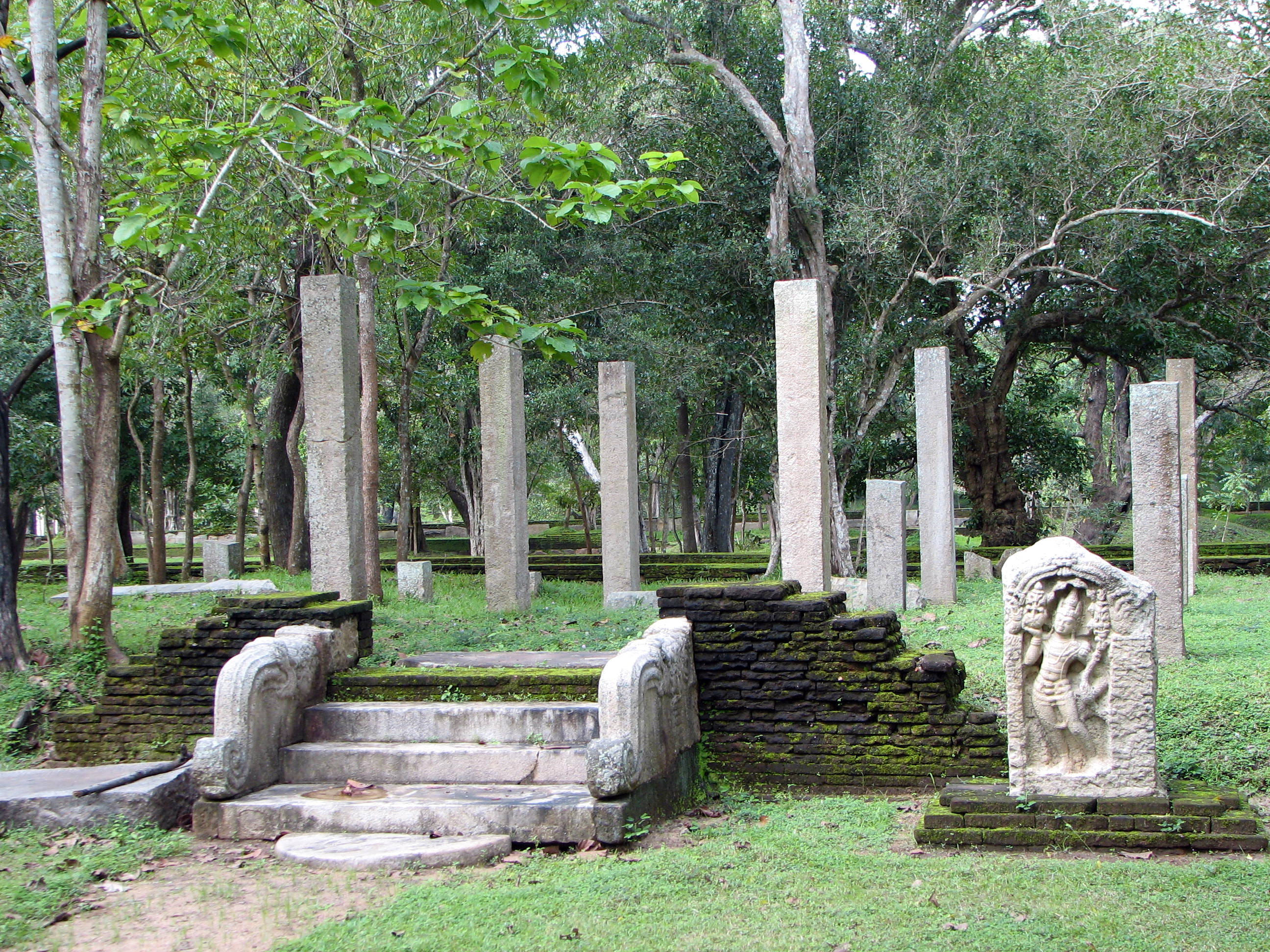
Encycloworld Heritage Postcard - Sacred City of Anuradhapura
Anuradhapura, (அனுராதபுரம் in Tamil), is one of the ancient capitals of Sri Lanka, famous for its well-preserved ruins of ancient Lankan civilization.
The city, now a UNESCO World Heritage Site, lies 205 km north of the current capital Colombo in Sri Lanka's North Central Province, on the banks of the historic Malvathu Oya.
From the 4th century BC, it was the capital of Sri Lanka until the beginning of the 11th century AD. During this period it remained one of the most stable and durable centers of political power and urban life in South Asia. The ancient city, considered sacred to the Buddhist world, is today surrounded by monasteries covering an area of over sixteen square miles (40 km²). Read more

Information and Image Obtained From Wikipedia, the free encyclopedia
Sri Lanka, Ancient City of Sigiriya, UNESCO World Heritage Site

Sri Lanka 100 Rupees 2004 UNC
Front: Decorative urn
Back: Sigiriya Rock
Sigiriya (Lion's rock) is an ancient rock fortress and palace ruin situated in the central Matale District of Sri Lanka, surrounded by the remains of an extensive network of gardens, reservoirs, and other structures. Sigiriya is also renowned for its ancient paintings (frescos), which are reminiscent of the Ajanta Caves of India. The Sigiriya was built during the reign of King Kassapa I (AD 477 – 495), and it is one of the seven World Heritage Sites of Sri Lanka. Sigiriya may have been inhabited through prehistoric times. It was used as a rock-shelter mountain monastery from about the 5th century BC, with caves prepared and donated by devotees to the Buddhist Sangha. Read more
Information Obtained From Wikipedia, the free encyclopedia
Encycloworld Heritage Postcard - Ancient City of Sigiriya
Monday, February 1, 2010
Srilanka, Sacred City of Anuradhapura, UNESCO World Heritage Site


Sri Lanka 500 Rupees 2005 UNC
Front: Kandy dancer; stylised dragon; Kandy drummers
Back: Thuparamaya Dagaba(Stupa in Anuradhapura)
Thuparama Continuing north from the Jethawana Dagaba, turn left at the crossroads to the site's oldest dagaba to house the right collar-bone of the Buddha. Built by Devanampiyathissa, the 19m high dagaba has retained its beautiful bell shape, despite restoration work, It is surrounded by concentric circles of a graceful granite monolithic pillars of a Vatadage which was added in the 7th Century, possibly originally design to support an over-arching thatched cover. It is a center of active pilgrimage, decorated with flags and light. Immediately to its north-east was the original Dalada Maligawa where the Tooth Relic was first enshrined when it was brought to Ceylon in AD 313. Chinese traveler monk Fahian gave a vivid description of its display, but only the stone columns remain The THUPARAMA Dagoba situated north of the Ruwanweli Seya.
This is the first stupa (dagaba) built in Sri Lanka.
King Devanampiyatissa erected this in the 3rd Century B.C After Buddhism was introduced by Arehath Mahinda Himi.
Thuparama was in ruins in In the 7th century and restored, and a Vatadage was added. The concentric stone pillars standing right round the Stupa are the reaming of the old Vatadage. Information and Image Obtained from mysrilanka.com
Thuparama dagaba in Anuradhapura, Sri LankaInmage Obtained From Wikipedia, the free encyclopedia
Saturday, February 7, 2009
Srilanka, Sacred City of Kandy, UNESCO World Heritage Site


Srilanka 1000 Rupees 2001 VF
Front: The elephant on the front of the note is "Raja". Raja carried the sacred tooth relic of Buddha in the annual Kandy Perehara for over 5o years until he died. There are many stories attached to Raja. Rajia is now stuffed and preserved on display at the Kandy Temple Museum. The man standing with Raja is a Muslim gent from the Eastern Province of Sri Lanka who was Raja's first owner.
Thanks for the Information Mr. Ravindra, Srilanka Lighthouses on stamps
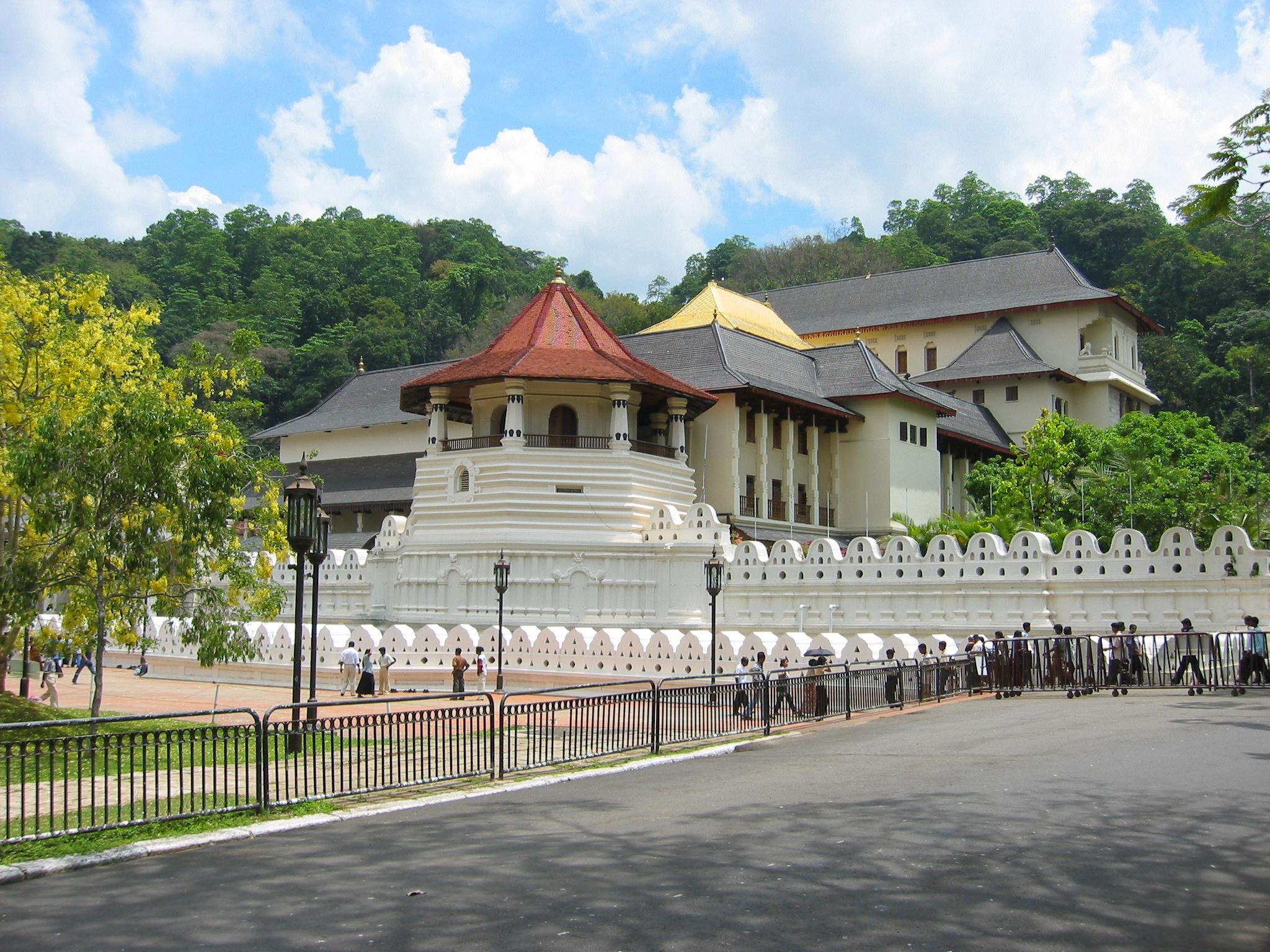
Back: Temple of Tooth (Buddha), Kandy , Peacock
The Temple of the Tooth Relic in Kandy, Sri LankaSenkadagalapura (an early name for Kandy)
Image Obtained From Wikipedia, the free encyclopedia
Subscribe to:
Posts (Atom)