Saturday, March 14, 2009

Croatia


Croatia 50000 Dinara 1993 Unc
Front: Ruder Baskovic (1711-1781)
Back: Statue of seated Glagolica, Mother Croatia

Roger Joseph Boscovich was a physicist, astronomer, mathematician, philosopher, diplomat, poet, and Jesuit from Ragusa (today Dubrovnik, in Croatia) who lived for a time in France, England and some Italian states. He is famous for his atomic theory, given as a clear, precisely-formulated system utilizing principles of Newtonian mechanics.
Portrait by Robert Edge Pine, London, 1760.

Information Obtained From Wikipedia, the free encyclopedia

Costa Rica


Costa Rica 5 Colones 1989 UNC
Front: Rafael Yglesias Castro; "Guaria Morada" (Cattleya skinneri), a purple orchid. It was designated the National Flower of Costa Rica on 15th of June, 1939;
Back: Allegory scene of Teatro Nacional in 1897

Monday, March 9, 2009

Cambodia - Banteay srei


Cambodia 10 Riels 1955 UNC
Front: Banteay Srei, Angkor
Back: Building

Banteay Srei (or Banteay Srey)is a 10th century Cambodian temple dedicated to the Hindu god Shiva. Located in the area of Angkor in Cambodia, Banteay Srei is built largely of red sandstone, a medium that lends itself to the elaborate decorative wall carvings which are still observable today. The buildings themselves are miniature in scale, unusually so when measured by the standards of Angkorian construction. Banteay Srei is known for the intricacy of its carvings. It has been speculated that the temple's modern name, Banteay Srei, is due to the many devatas carved into the red sandstone walls. Many niches in the temple walls contain carvings of devatas or dvarapalas.

Information Obtained From Wikipedia, the free encyclopedia

Image Obtained from By torridcraftaffair on Flickr

Ceylon, Temple of the Tooth, Kandy-UNESCO World Heritage Site


Ceylon 10 Rupees 1982 UNC
Front: Temple of the Tooth, Kandy
Back: Dagoba, Raja Maha Vihare , Kelaniya

UNESCO World Heritage Site in 1988. The Sri Dalada Maligawa or The Temple of the Sacred Tooth Relic is a temple in the city of Kandy in Sri Lanka. It was built within the royal palace complex which houses a relic of Buddha, a tooth, which is venerated by Buddhists. Monks of the two chapters of Malwatte and Asgiriya conduct daily ritual worship in the inner chamber of the temple, in annual rotation. They conduct these services three times a day: at dawn, at noon and in the evening.
Information and Image Obtained From Wikipedia, the free encyclopedia

Ceylon, Vatadage, Polonnaruwa- UNESCO World Heritage Site


Ceylon 5 Rupees 1982 UNC
Front: Vatadage, Polonnaruwa
Back: Sculpture

Vatadage Temple, in Polonnaruwa, is a uniquely Sri Lankan circular shrine enclosing a small dagoba. The vatagage has a three-tiered conical roof, spanning a height of 40–50 feet, without a center post, and supported by pillars of diminishing height.
Information and image Obtained From Wikipedia, the free encyclopedia

Brunei


Brunei 1 Dollar 1989 VG

Brunei


Brunei 10 Dollar UNC 1998
Front: His Majesty Sultan Haji Hassanal Bolkiah Mu’izzaddin Waddaulah, Kaladi Lanut (Purple-leafed forest yam)
Back: Kanopi Hutan Tropika (Rainforest canopy) This is the primary layer of the rainforest, which rises to 45m.

Brunei


Brunei Brunei 1 Ringgit 1996
Front: His Majesty Sultan Haji Hassanal Bolkiah Mu’izzaddin Waddaulah, Simpur Gajah (Riverside Simpur)
Back: AirTerjun Hutan Tropika (Rainforest waterfall)

Marriage and children
The Sultan currently has two wives, with Raja Isteri Pengiran Anak Hajah Saleha being designated his first wife. His former second wife, Pengiran Isteri Hajah Mariam, was a former stewardess for the national carrier, Royal Brunei Airlines (RBA) whom he divorced in 2003, stripping her of all her royal titles. In August 2005her place was taken by a former Malaysian TV3 presenter, Azrinaz Mazhar Hakim, who is 33 years younger than the Sultan.

Prince Al-Muhtadee Billah is the crown prince and the Sultan's heir, the eldest son of the Sultan and Raja Isteri Pengiran Anak Saleha, his first wife. As of 2008, Hassanal Bolkiah has five sons and seven daughters with his three wives.

By HM Raja Isteri Pengiran Anak Saleha:
HRH Princess Rashidah (born 26 July 1969)
HRH Princess Muta-Wakkilah (born 12 October 1971)
HRH Crown Prince Al-Muhtadee Billah (born 17 February 1974)
HRH Princess Majeedah (born 16 March 1976)
HRH Princess Hafizah (born 12 March 1980)
HRH Prince 'Abdul Malik (born 30 June 1983)
By HRH Pengiran Isteri Mariam:
HRH Prince 'Abdul 'Azim (born 29 July 1982)
HRH Princess 'Azemah (born 26 September 1984)
HRH Princess Fadzillah (born 23 August 1985)
HRH Prince 'Abdul Mateen (born 10 August 1991)
By HRH Pengiran Isteri Azrinaz Mazhar
HRH Prince 'Abdul Wakeel (born 1 June 2006)
HRH Princess Ameerah Wardatul Bolkiah (born 28 January 2008)

Sunday, March 8, 2009

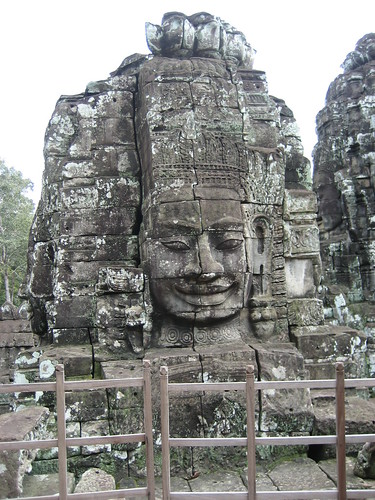
Cambodia - Bayon Temple, Historical and Archaeological


Cambodia 5 Riels 1972 UNC
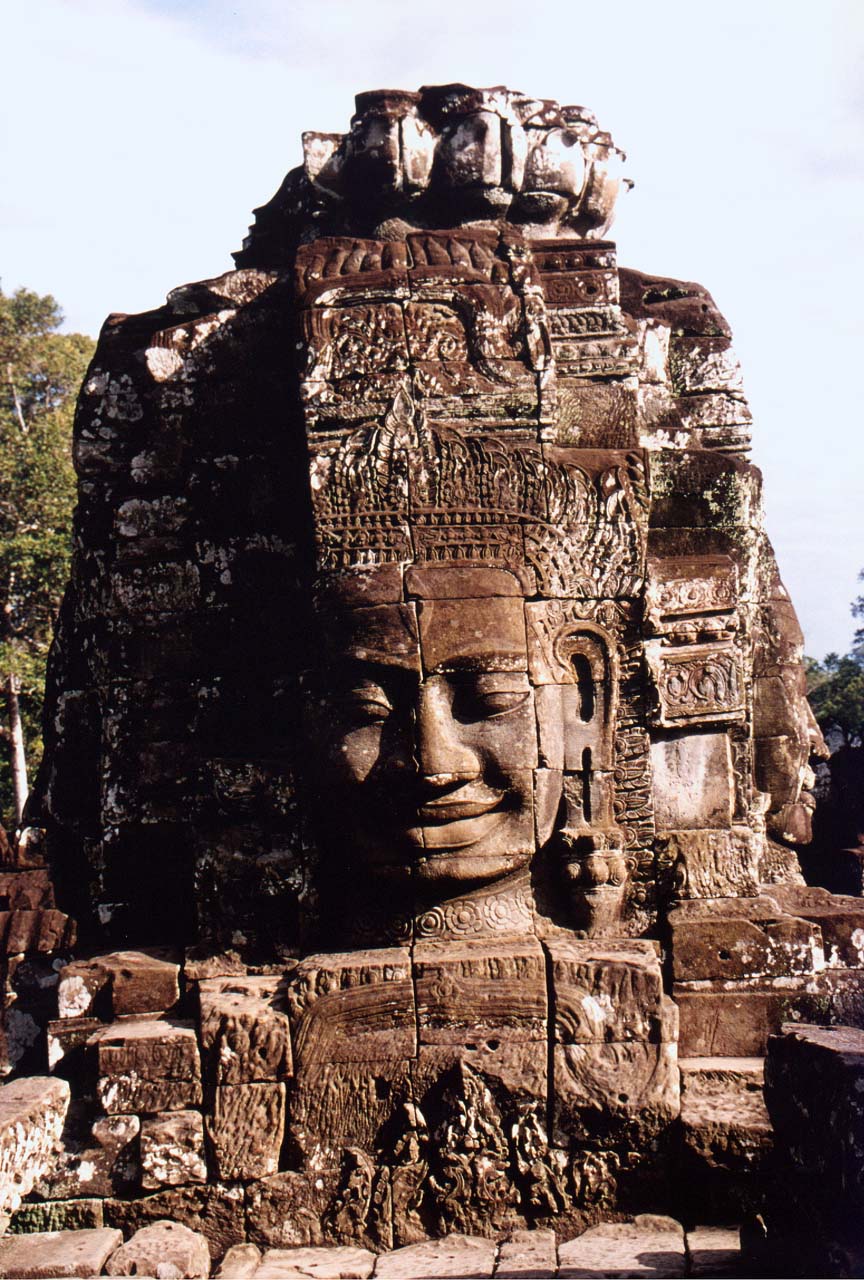
Front: Bayon Temple tower with the four faces of Avalokitesvara Bodhisattva
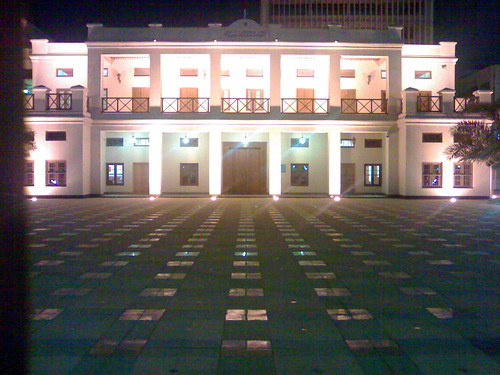
Back: The "Prasat Chan Chaya" square is depicted to the right and centre.

The Chan Chhaya Pavilion, view from the gardens

The Preah Thineang Chan Chhaya ("Moonlight Pavilion"), is an open-air pavilion that serves as stage for Khmer classical dance in the past and present. It is one of the most notable buildings of the palace as it easily seen from the outside as it was built alongside a section of the palace walls. The Chan Chhaya Pavilion has a balcony that was used as a platform for viewing parades marching along Sothearos Boulevard of Phnom Penh.

Information and Image Obtained From Wikipedia, the free encyclopedia

Image Obtained from By Eelin's 5th eye on Flickr

The Bayon was the last state temple to be built at Angkor, and the only Angkorian state temple to be built primarily as a Mahayana Buddhist shrine dedicated to the Buddha, though a great number of minor and local deities were also encompassed as representatives of the various districts and cities of the realm. It was the centrepiece of Jayavarman VII's massive program of monumental construction and public works, which was also responsible for the walls and naga-bridges of Angkor Thom and the temples of Preah Khan, Ta Prohm and Banteay Kdei.

The similarity of the 216 gigantic faces on the temple's towers to other statues of the king has led many scholars to the conclusion that the faces are representations of Jayavarman VII himself. Others have said that the faces belong to the bodhisattva of compassion called Avalokitesvara or Lokesvara.[5] The two hypotheses need not be regarded as mutually exclusive. Angkor scholar George Coedès has theorized that Jayavarman stood squarely in the tradition of the Khmer monarchs in thinking of himself as a "devaraja" (god-king), the salient difference being that while his predecessors were Hindus and regarded themselves as consubstantial with Shiva and his symbol the lingam, Jayavarman as a Buddhist identified himself with the Buddha and the bodhisattva.
Information Obtained From Wikipedia, the free encyclopedia

Cambodia, Royal Palace of Phnom Penh


Cambodia 1 Riels 1972 UNC
Front: Boats & ships
Back: Royal Palace

Royal palace
The Royal Palace of Phnom Penh, Cambodia is a complex of buildings which are the royal abode of the Kingdom of Cambodia. The Kings of Cambodia have occupied it since it was built in 1866, with a period of absence when the country came into turmoil during and after the reign of the Khmer Rouge.

The Royal Palace today

The Royal Palace has had some modifications to its buildings; some have also been demolished completely. The Throne Hall there today is actually not the original one King Norodom would have used when the palace was first built. The Silver Pagoda has undergone a tremendous face-lift with its tiles replaced and buildings given new paint. It has become a popular tourist attraction in Phnom Penh. Visitors are able to wander around the Silver Pagoda compound and the central compound containing the Throne Hall, however, they may not enter the Khemarin Palace compound. The Khemarin Palace compound is where Norodom Sihamoni, the present King of Cambodia currently resides.

Information and image Obtained From Wikipedia, the free encyclopedia

Wednesday, March 4, 2009

Bahrain


Bahrain 1/2 Dinar 2007 UNC
Front: Old Bahrain court
Back: Bahrain International Circuit is a venue used for drag racing, GP2, and an annual Formula One Grand Prix. For the first time in 2006, there was a V8 Supercar race, named the Desert 400, and also a 24 Hour Race.

Image Obtained By LAYAL7 on Flickr

Tuesday, March 3, 2009

Swaziland

The Kingdom of Swaziland is a landlocked country in Southern Africa, bordered to the north, south, and west by South Africa, and to the east by Mozambique. The nation, as well as its people, are named after the 19th century king Mswati II.

Swaziland has been continuously inhabited since prehistory. Today, the population is primarily Bantu-speaking ethnic Swazis. A British protectorate following the end of the Second Boer War, it gained independence in 1968. Swaziland is a member of the Southern African Development Community, the African Union, and the Commonwealth of Nations.

Swaziland's economy is dominated by agriculture and subsistence farming. Growth has been hampered by the effects of HIV and AIDS, the prevalence of which is the highest in the world. Struggles between pro-democracy activists and supporters of the monarchy have also resulted in the suppression of opposition political groups and dissidents.

In 1974, the Monetary Authority of Swaziland introduced notes in denominations of 1 lilangeni, 2, 5 and 10 emalangeni, with 20 emalangeni notes following in 1978. In 1981, the Central Bank of Swaziland took over paper money production, first issuing notes commemorating the Diamond Jubilee of King Sobhuza II. Between 1982 and 1985, it introduced non-commemorative notes for E2, E5, E10, and E20. The 50 emalangeni notes were introduced in 1990. The E2 and E5 notes were replaced by coins in 1995, whilst 100 and 200 emalangeni notes were introduced in 1996 and 1998, respectively, with the E200 notes commemorating the 30th anniversary of independence

Poster about the Reed Dance
where the King often selects a new wife


Swaziland 1 Lilangeni 1974 UNC
Front: King Sobhuza II
Back: Reed Dance
The Umhlanga (Reed Dance) is a traditional dance where twenty to thirty thousand of Swaziland's maidens congregate and dance for the public. This tradition has existed for a very long time. It usually takes place around August when the weather is less harsh and the reed has matured. Thousands of maidens from all parts of Swaziland attend the reed dance.

As the girls dance, the spectators may join the dance [kugiya] or throw money at their feet in appreciation of the good dance. The king is allowed to pick one of the maidens to be his bride. On September 6, 2004, he chose a sixteen-year-old reed dance participant and finalist from Miss Teenage Swaziland as a fiancée, to join his eleven wives and one other fiancée.
Information Obtained From People and Places of the World www.galenfrysinger.com

Paramount Chief of Swaziland (1899-1968)King of Swaziland (1968-1982)


Reign -December 10, 1899 - August 21, 1982
Coronation -December 22, 1921
Born -July 22, 1899(1899-07-22)
Birthplace -Zombodze, Swaziland
Died August -21, 1982 (aged 83)
Place of death -Mbabane, Swaziland
Predecessor -Ngwane V
Queen Labotsibeni Mdluli (Queen Regent 1899-1921)
Successor -Mswati III
Consort -70 wives
Offspring -210 children
Royal House -House of Dlamini
Father -Paramount Chief Ngwane V
Mother -Queen Lomawa Ndwandwe

Information and Image Obtained From Wikipedia, the free encyclopedia

Venezuela


Venezuela 5 Bolivares UNC
Front: Pedro Camejo(Venezuelan soldier)
Back: Giant Armadillo - also, variously, Tatou, Ocarro, Tatu-canastra or Tatú Carreta, Priodontes maximus is the largest living species of armadillo. It was once found widely throughout the tropical forests of eastern South America and now ranges throughout varied habitat as far south as northern Argentina. This species is considered vulnerable to extinction
.


Bust of Pedro Camejo in Camp Carabobo

Camejo was a slave of Vicente Alonzo in Apure. Pedro Camejo, better known as Negro Primero, or 'The First Black' (San Juan de Payara, Venezuela, 1790 - Campo Carabobo, Venezuela, June 24, 1821) was a Venezuelan soldier who at first fought with the royal army, only to later go over to the rebel army during the Venezuelan war of independence, reaching the rank of lieutenant.

The nickname of Negro Primero was inspired by his bravery and skill in handling spears, and because he was always in the first line of attack on the battlefield. It is also attributed to his having been the only officer of colour in the army of Simon Bolívar.
Information and Image Obtained From Wikipedia, the free encyclopedia

Cambodia, Angkor Wat


Cambodia 100 Riels 1973 UNC
Front: Weaving Carpet
Back: Angkor Wat

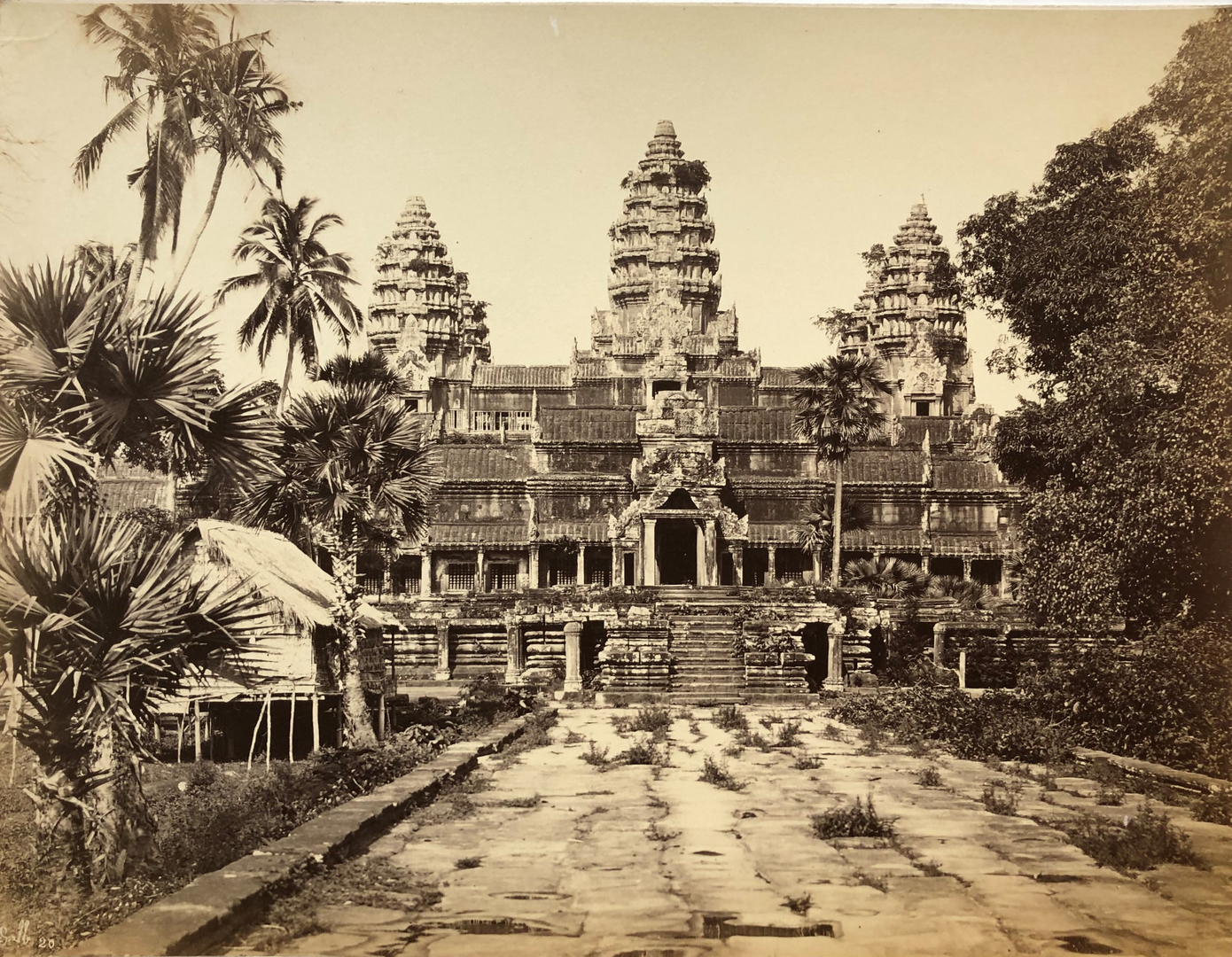
An 1866 photograph of Angkor Wat by Emile Gsell

Angkor Wat is a temple complex at Angkor, Cambodia, built for the king Suryavarman II in the early 12th century as his state temple and capital city. As the best-preserved temple at the site, it is the only one to have remained a significant religious centre since its foundation—first Hindu, dedicated to Vishnu, then Buddhist. The initial design and construction of the temple took place in the first half of the 12th century, during the reign of Suryavarman II (ruled 1113 – c. 1150)Information and Image Obtained From Wikipedia, the free encyclopedia

Sunday, March 1, 2009

Cambodia - Large Banknotes

Cambodian Banknotes of Old Days

Cambodian currency - the riel - appeared in 1955, when it replaced the formerly used indochinese piastres. During the government of Paul Pot in 1975-1979 the monetary circulation and the bankning system were dismissed; all that restored by 1979. 1 riel equals 100 sens.
Information Obtained from National Bank Of Cambodia


Cambodia 100 Riels 1972 UNC
Front: Two Oxe, Temple
Back: Three ceremonial women

Cambodia - Large Banknotes


Cambodia 500 Riels 1975 UNC
Front: Women with apot
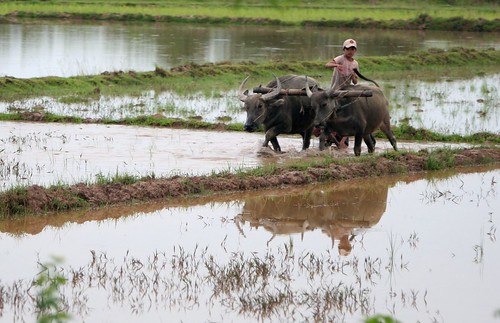
Back: Rice paddy field

Image Obtained from By DaveSinclair on Flickr

Cambodia - Large Banknotes, Historical and Archaeological


Cambodia 1000 Riels 1974 UNC
Front: School Children in Classroom
Back: Bodhisattva Lokesvara (In Sanskrit-Aryavalokitesvara)


Image Obtained from www.tropicaisland.de

Avalokiteśvara holding a lotus flower. A relief from the 8th-9th century Candi Plaosan temple, near Prambanan, Java, Indonesia.
Information and Image Obtained From Wikipedia, the free encyclopedia
Related Posts with Thumbnails