Sunday, October 21, 2012

Malaysia New RM 10, 2012 (Fourth Series)


Malaysia RM 10 16 July 2012 UNC

Front: Tuanku Abdul Rahman with the national flower, hibiscus
Back: Rafflesia

Malaysia New RM 1, 2012 (Fourth Series)


Malaysia RM 1 16 July 2012 UNC
Front: Tuanku Abdul Rahman with the national flower, hibiscus
Back: Wau Bulan

In May 2011, Bank Negara Malaysia had announced that they will introduce a new series of banknotes in order to replace the current design that has been in circulation for around 15 years. The most highlighted part of the announcement is the re-introduction of the RM20 note, which was not included in the third series. The design of the new notes was announced on December 21, 2011, and the notes are expected to be put into circulation in the second half of 2012. The new series banknotes are legal tender and will co-circulate with the existing series. The existing series will be gradually phased out. All banknote denominations in the new series will retain the portrait of the first Seri Paduka Baginda Yang di-Pertuan Agong, Tuanku Abdul Rahman ibni Tuanku Muhammad. The banknotes are supplied by Crane AB of Sweden, Giesecke & Devrient GmbH of Germany, Oberthur Technologies of France and Orell Fussli of Switzerland. They were put into circulation on July 16, 2012.

Information Obtained From Wikipedia, the free encyclopedia

Malaysian ringgit, 2012 (Fourth Series)


The Malaysian ringgit third series coinage and fourth series banknote designs announced in 2011 by Bank Negara Malaysia.

Information Obtained From Wikipedia, the free encyclopedia

India 5 Rupees


Friday, August 17, 2012

Ghana 10 Cedis


Ghana 10 Cedis 1978 AUNC
Front: Pipe smoker
Back: Hydroelectric dam

Yugoslavia 5000 Dinara


Yugoslavia 5000 Dinara VF 1993
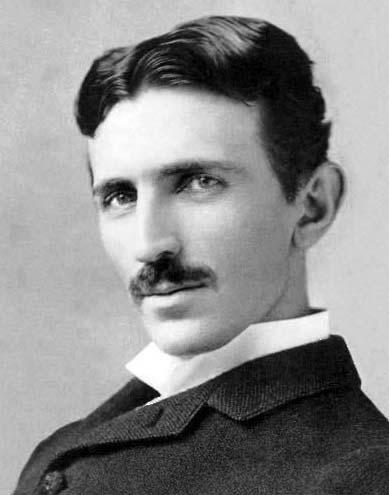
Front: Nikola Tesla (1856-1943)
Back: Museum of Nikola Tesla (Est. 1952)


Nikola Tesla was a Serbian-American inventor, physicist, mechanical engineer, electrical engineer, and futurist. He is best known for his contributions to the modern alternating current (AC) electrical supply system. Tesla's patents and theoretical work helped formed the basis of wireless communication and the radio. His many revolutionary developments in the field of electromagnetism were based on Michael Faraday's theories of electromagnetic technology. Read more

The Nikola Tesla Museum is located in the central area of Belgrade. It holds more than 160,000 original documents, over 2,000 books and journals, over 1,200 historical technical exhibits, over 1,500 photographs and photo plates of original, technical objects, instruments and apparatus, and over 1,000 plans and drawings. The Nikola Tesla Archive was inscribed on UNESCO's Memory of the World Programme Register in 2003 due to its critical role regarding history of electrification of the world and, more importantly, future technological advancements in this area. The Nikola Tesla Museum is housed in a residential villa built in 1927 according to project of Dragiša Brašovan, a distinguished Serbian architect. The building was used for various purposes until December 5, 1952, when Nikola Tesla Museum was founded in accordance with the decision of the Government of the Federal People's Republic of Yugoslavia. The material for the museum was taken from New York bound for Belgrade, Yugoslavia on September 7, 1951 as a result of efforts by Sava Kosanovic, Tesla's nephew and closest relative (KGB agent, codename "KOLO", see American Espionage and Project Venona) and his attorney Wittenberg. It has been said this was "Tesla's will." No legal instrument or documentation bearing Tesla's signature has ever been found to substantiate this claim, nor has the Museum allowed an independent, unbiased researcher to verify the existence of such records. It is believed that Tesla died in testate.

It is a deviation from standard archival practice that Tesla's work is contained outside of the original geographical context in which his life occurred. Tesla was an American citizen, and considered his prize possession to be his naturalization papers. In contrast, he spent only 31 hours of his entire life on the present territory of modern-day Serbia. Over the past 60 years, a number of his papers have suffered water damage from neglect. This has led historians to consider it a disservice to Tesla that his trunks were removed from the United States of America in the first place. With renewed worldwide interest about Tesla's work in the areas of mechanical and electrical engineering, full and unhindered access is expected. However, it is certain that many original documents are uncataloged and have already been lost, stolen, censored or damaged. Read more

Information and Image Obtained From Wikipedia, the free encyclopedia
Related Posts with Thumbnails